


Crafting a compelling college essay can be a daunting task, yet it is a crucial component of your application that can set you apart from the competition. Did you know that admissions officers spend only a few minutes reading each essay? This highlights the importance of clear, impactful writing that captures their attention right from the start.
With “College Essay Review AI,” you gain access to instant, accurate feedback that can elevate your writing to new heights. Imagine receiving tailored suggestions that address your unique voice and ideas-this technology is designed to help you refine your thoughts and enhance clarity, ultimately boosting your chances of admission.
Whether you’re brainstorming, drafting, or polishing your essay, this innovative tool offers step-by-step guidance and actionable tips to make the writing process less intimidating. Dive in to discover how you can transform your college essay into a powerful reflection of your individuality and aspirations.
Understanding the Role of AI in College Essay Reviews

The evolution of artificial intelligence has expanded its capabilities beyond simple calculations and repetitive tasks, enabling it to engage in more sophisticated applications like essay reviews. In the context of college essay writing, AI acts as an invaluable resource for students seeking instant, constructive feedback on their work. By analyzing the structure, coherence, and style of essays, AI tools provide tailored suggestions that help students refine their writing and develop critical thinking skills. This immediate support can ease the often daunting process of drafting and revising, making it more approachable and less intimidating.
One of the primary advantages of using AI in essay reviews is its ability to deliver feedback with unprecedented speed. Students can submit their drafts and receive insights within moments, allowing for a more iterative writing process. This instantaneous response helps students identify areas for improvement-such as grammar issues, weak argumentation, or unclear phrasing-early on, which significantly enhances the quality of the final product. Additionally, AI can offer personalized suggestions based on individual writing styles, helping students to articulate their ideas more effectively.
Moreover, AI’s role in college essay reviews extends to fostering learning and independence. By providing examples of effective writing techniques and offering explanations for its recommendations, AI tools can teach students how to enhance their writing skills over time. This mentorship capability encourages students to become more self-sufficient in their writing endeavors, reinforcing the idea that while AI can support them, the ultimate goal is for them to develop as confident writers. As these technologies continue to advance, the collaboration between students and AI will likely redefine the landscape of academic writing, making it an essential tool in their educational journey.
The Benefits of Instant Feedback for College Essays

In the fast-paced world of academia, timely and effective feedback can be the difference between a good essay and a great one. With AI tools designed for college essay reviews, students gain the remarkable advantage of instant feedback. This real-time analysis not only allows them to identify weaknesses and strengths in their writing but also empowers them to implement changes quickly, making the editing process less daunting.
One significant benefit of instant feedback is that it facilitates a more iterative approach to writing. Students can submit their drafts and receive immediate insights on everything from grammatical errors to structural issues. For instance, if a student struggles with thesis clarity, AI can pinpoint this problem right away, allowing the writer to refine their argument before moving on to other aspects of the essay. This can lead to a cleaner, more polished final product since students can tackle revisions in smaller, manageable chunks rather than waiting for extensive feedback later in the process.
Another key aspect of this instant feedback mechanism is its personalization. Advanced AI tools analyze a student’s writing style and provide tailored suggestions that reflect their unique voice. This helps students feel more invested in their writing, as they are not just receiving generic comments but insights that resonate with how they express their ideas. For example, if a student tends to use overly complex sentences, the AI might suggest simplifying phrasing for better clarity, helping them maintain their authentic voice while improving readability.
By leveraging the speed and accuracy of AI-powered feedback, students can transform their writing process into a more constructive experience. The instant feedback loop encourages active learning and adaptability, allowing aspiring writers to experiment with different styles and structures confidently. Overall, this powerful tool not only enhances the quality of college essays but also cultivates essential writing skills that students will carry throughout their academic careers and beyond.
How Accurate is AI Feedback on Writing Quality?
The effectiveness of AI feedback on writing quality hinges largely on the sophistication of the underlying algorithms and the comprehensiveness of the data on which they were trained. Many AI tools excel at identifying grammatical errors and offering stylistic advice, often providing suggestions that align with established writing conventions. However, the accuracy of AI feedback can vary significantly between different systems, depending on their design and purpose. For instance, more advanced models can evaluate complex arguments and thesis statements, while others may focus primarily on syntax and coherence.
To truly understand the reliability of AI-generated feedback, it’s crucial to consider how these tools process language. Many AI systems utilize deep learning techniques that analyze vast datasets of written material, enabling them to learn patterns and styles. This training allows them to detect common pitfalls-like passive voice usage or repetitive phrasing-but they can sometimes struggle with the nuances of creativity and context. Therefore, while an AI might flag a phrase as awkward or convoluted according to standard guidelines, it might overlook the intended tone or style that a student wishes to convey.
Students can maximize the benefits of AI feedback by supplementing it with their judgment and insights. An effective approach is to cross-reference AI suggestions with personal revisions. For example, if an AI tool highlights a sentence as unclear, students should reflect on why it feels unclear and how their unique voice is captured within that phrasing. This method of critical engagement not only leads to improved essays but also fosters deeper writing skills, as students learn to balance technical proficiency with personal expression.
Ultimately, while AI can greatly enhance the writing process by offering swift, data-driven feedback, it is most effective when used as a supportive tool rather than a definitive authority. By understanding its strengths and limitations, students can harness the power of AI to refine their writing while cultivating their critical thinking skills, creating a more holistic approach to academic writing.
Key Features to Look for in Essay Review AI Tools
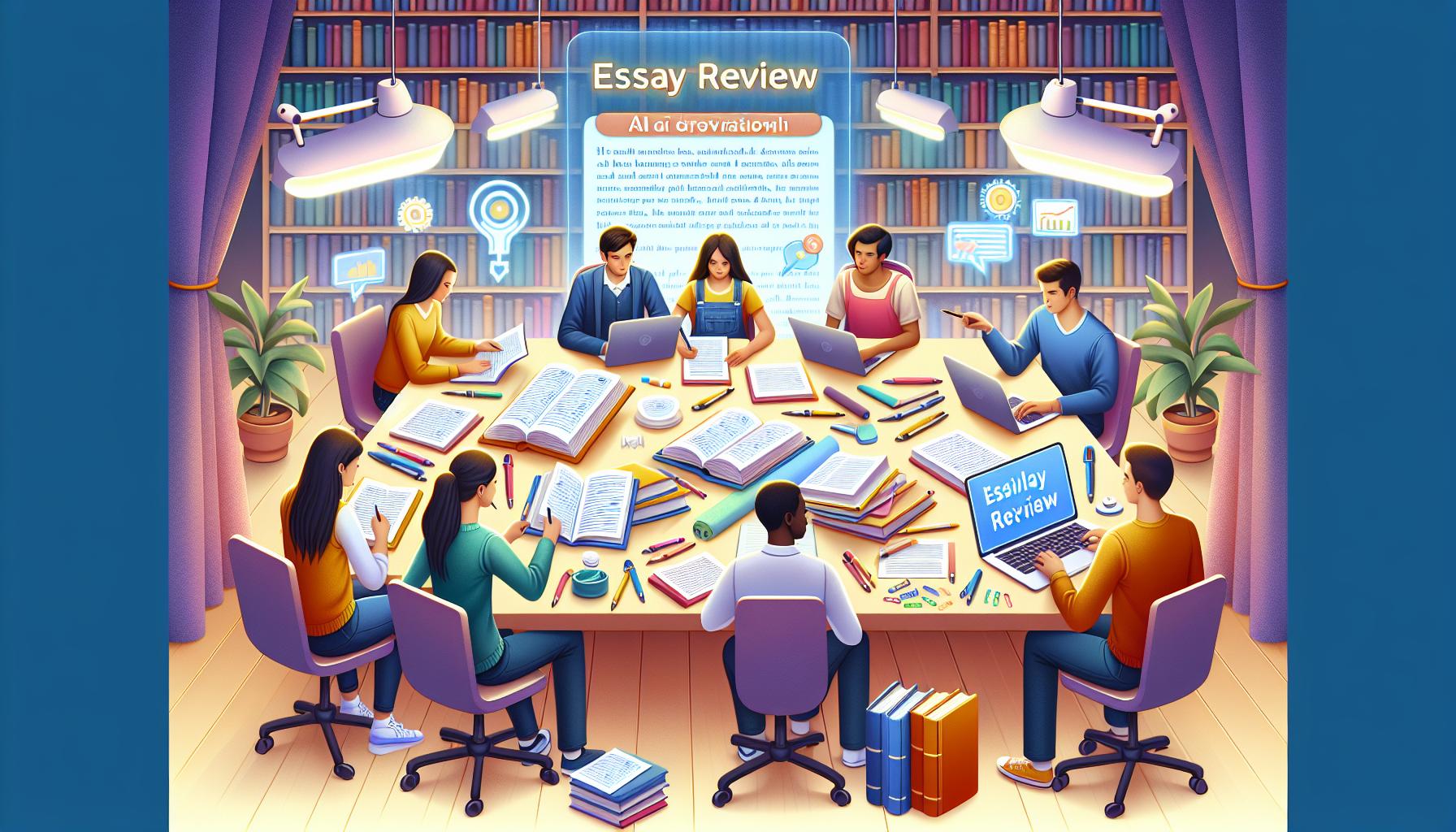
In the ever-evolving landscape of academic writing, choosing the right AI essay review tool can be a game-changer for students looking to enhance their writing skills. With numerous options available, it’s essential to identify key features that can significantly impact the quality and effectiveness of the feedback you receive. Tools that offer real-time analysis can provide immediate suggestions, allowing students to revise their work on the spot. This instant feedback loop not only saves time but can also facilitate a deeper understanding of writing conventions and techniques.
Another crucial aspect is the tool’s ability to evaluate argument structure and clarity of expression. Advanced AI systems utilize language models to assess not just grammar, but also how well arguments are presented. They should highlight weaknesses in thesis statements and logical flow, providing constructive suggestions that help students strengthen their overall argument. Additionally, look for AI tools that offer customized feedback based on the type of essay being written, whether it’s a persuasive paper, a research proposal, or a narrative. This targeted guidance is invaluable in fostering good writing habits tailored to specific assignments.
Furthermore, consider integrations with other platforms such as grammar checkers and citation tools to streamline the writing process. A comprehensive essay review tool should ideally connect with widely used applications, enabling a seamless experience that allows students to focus on content creation without toggling between different interfaces. Simultaneously, assess whether the tool maintains an intuitive user interface; this will ensure that you spend more time writing and less time navigating confusing menus.
Finally, it’s beneficial when a tool provides actionable insights along with in-depth explanations. Feedback that teaches students why certain changes are necessary not only helps improve immediate essays but also cultivates long-term writing skills. By choosing an AI essay review tool that encompasses these essential features, students will be better equipped to produce high-quality, polished essays that illustrate their true academic potential.
Comparing Popular College Essay Review AI Options

As students navigate the complexities of academic writing, choosing the right AI essay review tool can significantly impact their writing quality and confidence. With numerous options available, understanding the strengths and weaknesses of popular AI tools can help students make informed decisions that align with their unique writing needs. Below is a comparison of some widely used AI essay review options, highlighting their key features, user experiences, and potential drawbacks.
Popular AI Essay Review Tools
- Grammarly: Known primarily as a grammar checker, Grammarly also offers advanced features for style suggestions and clarity enhancements. The premium version provides insights into tone and engagement, making it a valuable tool for crafting compelling essays.
- ProWritingAid: This tool is designed for serious writers looking for comprehensive feedback. It offers detailed reports on various aspects of writing, including style, grammar, and readability. The integration with various writing platforms allows for seamless editing across different applications.
- Quillbot: While primarily an AI paraphrasing tool, Quillbot includes features for grammar checking and summarization. This is particularly useful for students looking to refine their essays and improve vocabulary choices.
- Slick Write: This free tool provides detailed feedback on grammar, potential stylistic mistakes, and other features like sentence structure and word variety. It’s an excellent option for students who want to analyze their writing comprehensively without incurring costs.
- Purdue OWL: While not an AI tool, Purdue Online Writing Lab provides extensive resources and guidelines for academic writing. Students can utilize these guidelines alongside AI tools for a holistic approach to essay refinement.
Features to Consider
When comparing these tools, consider the following features:
- Real-Time Feedback: Tools like Grammarly and ProWritingAid offer real-time editing suggestions, allowing students to make immediate improvements as they write. This is invaluable for maintaining flow and focus.
- Customization: Look for tools that allow you to set goals based on your writing objectives. Some platforms, like ProWritingAid, provide tailored feedback depending on the type of document you’re creating.
- User Experience: An intuitive interface can significantly enhance usability. Tools such as Slick Write make navigation simple, allowing users to focus more on their writing rather than getting lost in settings.
- Integration Capabilities: Consider whether the tool can integrate with other software or online platforms you regularly use. Grammarly’s integration with Microsoft Word and Google Docs is a prime example of this convenience.
Choosing the right AI essay review tool is about finding a balance between features that support your writing process and personal preferences. By exploring these popular options and their capabilities, students can enhance their writing skills, produce higher-quality essays, and ultimately boost their academic performance.
Using AI to Enhance Your Writing Skills
Utilizing AI tools in your writing process can significantly elevate your skills and boost your confidence. These intelligent systems can provide instant feedback, allowing you to learn as you write, and helping you refine your essays effectively. Imagine crafting your paper while receiving real-time suggestions for improving grammar, style, and clarity-this is the transformative power of AI in education, specifically in college essay writing.
One approach to leveraging AI for writing enhancement is to regularly engage with feedback from tools like Grammarly or ProWritingAid. Start by drafting your essay without stress about perfection. Once you’ve written a draft, run it through an AI tool to identify areas of improvement. Pay close attention to suggestions regarding sentence structure, word choice, and overall coherence. For instance, if a tool flags a sentence as unclear, take the opportunity to analyze why it might be confusing and how you can clarify your argument. This iterative process not only strengthens your current essay but also teaches you to avoid similar issues in future writing.
Additionally, consider setting specific goals while using AI writing tools. For example, if your primary aim is to enhance the complexity of your vocabulary, use features like synonym suggestions in Quillbot to explore alternative word choices. You can even create a chart of the new words you learn and practice incorporating them into your writing. Employing these strategies encourages a growth mindset, where you view writing as a continuous journey rather than a series of assignments.
Lastly, don’t underestimate the value of combining AI feedback with your personal revisions. After implementing suggestions provided by an AI tool, revisit your draft to ensure it reflects your voice and maintains the essay’s intended tone. This step is crucial because while AI can enhance your technical skills, the heart of your writing-your unique perspective and experiences-must always shine through. By actively engaging with both AI feedback and personal revision, you’ll cultivate a more nuanced understanding of effective writing that will serve you well not only in your college essays but throughout your academic career.
Common Pitfalls When Relying on AI Feedback
Relying too heavily on AI feedback for your college essays can sometimes lead to unexpected missteps. While these powerful tools can provide valuable insights into grammar, style, and structure, they are not infallible. One major pitfall is over-reliance on AI suggestions, which can diminish your unique writing voice. For instance, if you consistently accept all changes proposed by an AI tool without considering your intent, your essays may start to sound generic or lack personality. It’s essential to remember that the most impactful essays are those that showcase your thoughts and experiences authentically.
Another common issue arises from misunderstanding the context of AI feedback. AI tools typically analyze language patterns and adherence to common writing standards, but they may not grasp the nuances of your specific argument or the emotional weight of your narrative. A tool might flag a metaphor as excessive or suggest simplifying a complex sentence, when in fact, that complexity is critical to conveying your point effectively. When using these tools, always verify that the suggestions align with your essay’s context and objectives. Analyzing AI insights critically helps maintain the integrity and purpose of your writing.
Lastly, students may fall into the trap of neglecting the revision process altogether. While AI feedback can accelerate the editing stage, it should never replace thoughtful reflection and revision. Engaging comprehensively with your draft-not just accepting changes but considering the reasoning behind them-will enhance your skills and understanding of effective writing. Take the time to draft, review AI suggestions, and then revise your work personally to ensure it resonates with your intended audience. This method not only improves the current essay but also builds your confidence and abilities for future writing tasks.
In summary, using AI feedback wisely involves balancing its insights with your voice, critically reflecting on suggested changes, and committing to a thorough revision process. Embracing this approach will not only elevate your essays but also foster your growth as a writer.
Real Student Experiences: Success Stories Using AI
The integration of AI tools into the college essay writing process has transformed how students approach their assignments, yielding remarkable success stories that showcase the potential these technologies have to elevate academic performance. One student, Maya, shared her journey of crafting a pivotal personal statement for her university application. Initially overwhelmed by the pressure to stand out, she turned to an AI essay review tool. The instant feedback provided her with insights on everything from sentence structure to thematic coherence. By leveraging the AI’s suggestions, Maya honed her narrative to reflect her authentic voice, ultimately submitting an essay that not only impressed her admissions committee but also built her confidence as a writer.
Another success story comes from Jake, who struggled with writer’s block during a challenging semester. Facing the daunting task of writing multiple essays, he utilized an AI tool to brainstorm ideas and outline his arguments. The AI’s capability to analyze successful essay patterns helped Jake visualize his structure, allowing him to break through the mental barriers he faced. With a clearer direction, he crafted meaningful essays that earned him top grades, demonstrating how AI can serve as a supportive partner in the writing process.
Tools Driving Success
The array of AI tools available today offers features that cater to diverse writing needs. For instance, tools that highlight grammar and style inconsistencies empower students to learn and improve their writing skills organically. Moreover, AI’s ability to provide style suggestions helps students develop their unique voice rather than conforming to a rigid format.
Positive Peer Influence
Many students have also found that sharing their AI-enhanced essays with peers sparked collaborative discussions that further enriched their writing. In a study group, Emma utilized AI feedback and shared results with her classmates. This exchange fostered an environment of learning where peers could offer additional insights, leading to refined essays that reflected depth and originality.
In sum, these real student experiences underscore the transformative potential of AI in essay writing. By harnessing these innovative tools, students not only enhance their immediate academic performance but also nurture essential writing skills that will serve them throughout their educational journey. Embracing AI feedback in a thoughtful way can lead to not only better essays but also deeper engagement with the writing process itself.
Integrating AI Feedback into Your Writing Process
can transform the way you approach college essays, enriching both the journey and the final product. By leveraging the strength of AI tools, students can create a dynamic partnership that enhances their writing, making the process smoother and more effective. Imagine receiving tailored insights on structure, argumentation, and style within moments of submitting your draft-this kind of instantaneous guidance can dramatically improve the quality of your essays.
To begin, it’s essential to establish a clear plan for utilizing AI feedback. Start by drafting your essay without excessive concern for perfection. Focus on expressing your ideas and thoughts; the AI will help refine them later. Once you have a complete draft, run it through an AI review tool. Pay attention to the feedback about grammar, clarity, and organization. Strongly consider suggestions for rephrasing sentences that may sound awkward or unclear. It’s crucial to remember that these tools are designed to assist, not dictate; retain your voice and ensure that the content reflects your unique perspective.
Steps to Integrate AI Feedback:
- Draft your essay: Focus on getting your ideas down without worrying too much about mistakes.
- Use AI for feedback: Run your completed draft through an AI writing tool to gain insights into grammar, style, and structure.
- Analyze the suggestions: Look critically at the feedback provided-what makes sense, what resonates with your style, and what doesn’t.
- Revise based on input: Make revisions prioritizing clarity and coherence, while ensuring your voice remains intact.
- Seek additional feedback: Consider sharing your revised essay with peers or mentors for further insights.
The integration of AI feedback is not merely about accepting suggestions; rather, it is an opportunity for growth. For example, if an AI tool indicates a certain paragraph lacks coherence or relevance, take a moment to reflect on why that might be. Use this as a learning moment to clarify your arguments and strengthen your written communication skills.
Additionally, it’s beneficial to keep a log of your writing process. Document how you use AI feedback and the changes you implement. Over time, you can track your improvement and identify trends in the feedback that recur across various essays. This habit not only enhances your writing but will also build your confidence, making the traditionally daunting task of essay writing feel more manageable and even enjoyable. Embracing AI as a collaborative partner empowers students at every level to elevate their writing capabilities and achieve academic success.
Maximizing the Value of AI in Essay Writing
Harnessing the capabilities of AI in essay writing can significantly enhance both the quality of your work and your personal writing journey. One essential strategy is to fully utilize the iterative nature of AI feedback. Instead of viewing AI tools merely as grammar checkers, consider them as interactive writing coaches. Begin by drafting your essay with an emphasis on creativity and self-expression, allowing your ideas to flow without the constraints of perfectionism. Once you have a solid draft, run it through your chosen AI tool to identify areas needing improvement.
Embrace Constructive Criticism
When you receive feedback, approach it with an open mind. For instance, if the AI highlights awkward phrasing or suggests reordering paragraphs to enhance clarity, view these pointers not as criticisms, but as valuable insights into how to communicate your ideas more effectively. Make revisions based on this feedback, but ensure that your personal voice remains intact; the goal is to refine your writing, not to mold it into a generic format.
Reflect and Learn
Integrating AI feedback should also involve personal reflection. If an AI tool notes that a specific section of your essay lacks coherence, take time to consider why this might be. Use this observation as a catalyst for growth, allowing it to strengthen your argumentation skills in future writing tasks. Document these insights in a writing journal, noting recurring feedback themes, which will inform your development as a writer over time.
Leverage AI for Specific Goals
You can also maximize AI’s value by setting specific writing goals before utilizing the tool. For example, if you’re struggling with transitions between ideas, explicitly ask the AI for suggestions on improving this aspect. Tailoring your requests not only enhances the relevance of the feedback but also encourages a greater engagement with your writing process.
By treating AI as a helpful partner in your writing, you empower yourself to enhance your skills and build confidence in your abilities. Whether you’re drafting your first college essay or working on a final thesis, embracing AI feedback as a collaborative element can transform your writing experience, making it more productive and enjoyable.
Future Trends: The Evolution of AI in Education
With the rapid advancement of technology, the landscape of education is evolving every day, especially in the realm of writing. AI-driven tools for college essay reviews are just the beginning of a broader trend towards integrating artificial intelligence into educational environments. As students increasingly turn to these tools, several key trends are emerging that promise to reshape not only how students approach writing but also how educators facilitate learning.
One significant trend is the personalization of feedback. Future AI essay review tools are likely to leverage machine learning algorithms to better understand individual writing styles, preferences, and areas of difficulty. This means that feedback will become more tailored, offering insights that are specific to each student’s strengths and weaknesses rather than generic advice. For example, if a student struggles with thesis clarity, the AI could provide targeted strategies and examples to enhance their argument development, making the learning experience more effective and focused.
Another trend is the integration of collaborative features in AI tools. As technology becomes more interconnected, students may have the option to share their essays with peers and educators directly through the AI platform. This could foster a more collaborative learning environment where students can receive diverse perspectives on their work, enhancing their critical thinking and revision skills. Incorporating peer reviews alongside AI feedback may not only enrich the writing process but also help students learn to evaluate and appreciate various writing styles, thereby building a more robust educational toolkit.
Lastly, as schools and universities continue to embrace digital learning, future AI tools may incorporate real-time data analytics to track students’ progress over time. This predictive analytics approach can provide educators with valuable insights into group trends, helping them to tailor their teaching strategies to address common challenges. For instance, if multiple students exhibit similar issues with structure or coherence, educators could adapt lessons to focus more on these topics, creating a targeted approach that enhances overall writing proficiency.
By embracing these technological trends, students and educators alike stand to benefit from a more dynamic and responsive educational landscape. With AI as a collaborative partner in the writing process, students can not only refine their skills but also gain confidence in their capabilities, making essay writing a more accessible and less daunting task. As this evolution continues, the focus will increasingly be on leveraging AI to foster creativity, critical thinking, and effective communication, essential skills for succeeding in today’s academic and professional environments.
Tips for Choosing the Right AI Essay Reviewer
Choosing the right AI essay reviewer can significantly determine the quality of feedback you receive, ultimately influencing your writing and academic success. With so many options available, selecting the most suitable tool requires careful consideration. Start by assessing your individual needs: What specific areas of your writing do you want to improve? Are you looking for grammar checks, structural advice, or style enhancements? Knowing your goals will help you narrow down your choices.
When evaluating different AI essay review tools, pay attention to the following features:
- Personalization: Does the tool adapt to your writing style and preferences? The best AI reviewers should offer feedback tailored to your specific strengths and weaknesses.
- Speed and Efficiency: How quickly does the AI provide feedback? Seek out tools that balance promptness with the depth of analysis, ensuring you receive comprehensive input without unnecessary delays.
- User-Friendly Interface: Is the platform easy to navigate? A good AI review tool should have an intuitive interface that lets you focus more on writing and less on figuring out how to use the software.
- Support and Resources: Does the tool offer additional resources, such as writing tips, examples, and tutorials? Comprehensive support can help you understand and implement the feedback more effectively.
- Trial Options: Does the service offer a trial period or a free version? This allows you to test various features and evaluate whether it meets your expectations before committing financially.
Always seek reviews or testimonials from other users. Real experiences can provide insight into how effective an AI tool is in practice compared to its advertised capabilities. Consider platforms that encourage academic honesty and integrity, ensuring that the AI promotes improvement in your writing skills rather than simply providing answers or rewrites.
Lastly, embrace the collaborative nature of writing. Choose a tool that facilitates interaction-some may even have a feature for peer reviews or community feedback, enriching your overall experience. By taking the time to choose the right AI essay reviewer, you can set yourself on a path to enhanced writing proficiency and greater academic confidence.
Frequently asked questions
Q: What is the role of AI in college essay reviews?
A: AI in college essay reviews automates the feedback process, providing instant analysis of grammar, punctuation, and style. This technology helps students identify areas for improvement quickly, enhancing their writing skills and saving valuable time.
Q: How can using AI improve my essay writing skills?
A: Utilizing AI can enhance your essay writing skills by offering personalized feedback on structure and content, helping you understand common mistakes. Regularly applying this feedback allows you to refine your skills and produce more compelling essays over time.
Q: Are AI essay review tools accurate in their feedback?
A: Yes, most AI essay review tools provide accurate feedback by using advanced algorithms to assess writing quality. However, it’s essential to combine AI insights with your own critical thinking to ensure the feedback aligns with your unique voice and intent.
Q: What should I look for when choosing an AI essay reviewer?
A: When selecting an AI essay reviewer, consider features like real-time feedback, user-friendly interfaces, and compatibility with various writing styles. Additionally, check if the tool provides examples and resources to help you learn from the feedback effectively.
Q: How do I integrate AI feedback into my writing process?
A: To integrate AI feedback, start by submitting your draft to an AI tool and carefully reviewing its suggestions. Revise your essay based on the feedback received, focusing on strengthening weak areas while maintaining your original voice. This iterative process improves the final product.
Q: Can AI essay reviewers help with formatting and citations?
A: Yes, many AI essay reviewers assist with formatting and citations by providing guidelines or automated tools to ensure compliance with styles like APA or MLA. Using these features can save time and enhance the professionalism of your essays.
Q: What are the limitations of using AI for college essay reviews?
A: AI tools may struggle with context or nuanced feedback. They often lack the ability to understand the emotional tone or specific requirements of complex assignments, making it crucial to complement AI feedback with human insights.
Q: Will using AI for essay reviews make me dependent on technology?
A: It’s possible to become reliant on AI tools, but to avoid dependence, balance their use with traditional writing practices. Engage with feedback as a learning opportunity, ensuring you develop your writing skills independently while benefiting from technological assistance.
Concluding Remarks
Unlock your full potential with “College Essay Review AI: Get Instant, Accurate Feedback.” With just a few clicks, enhance your essay into a compelling narrative that showcases your unique voice and experiences. Don’t miss out-get started today and transform your writing journey into one of success and confidence.
Explore related resources in our writing guide section and connect with fellow aspiring authors in our community forum to exchange tips and experiences. If you’re still unsure, consider signing up for our newsletter to receive ongoing support and insights.
Your essay is a cornerstone of your college application; make every word count! Visit our tools page for more resources and keep refining your craft. Remember, the opportunity for feedback is just a moment away-take the leap to elevate your academic storytelling and make your application stand out!


